Conveyor Belt Scraper Types Explained
Primary and secondary scrapers: what each one does, where it fits on the belt and which blade to choose.
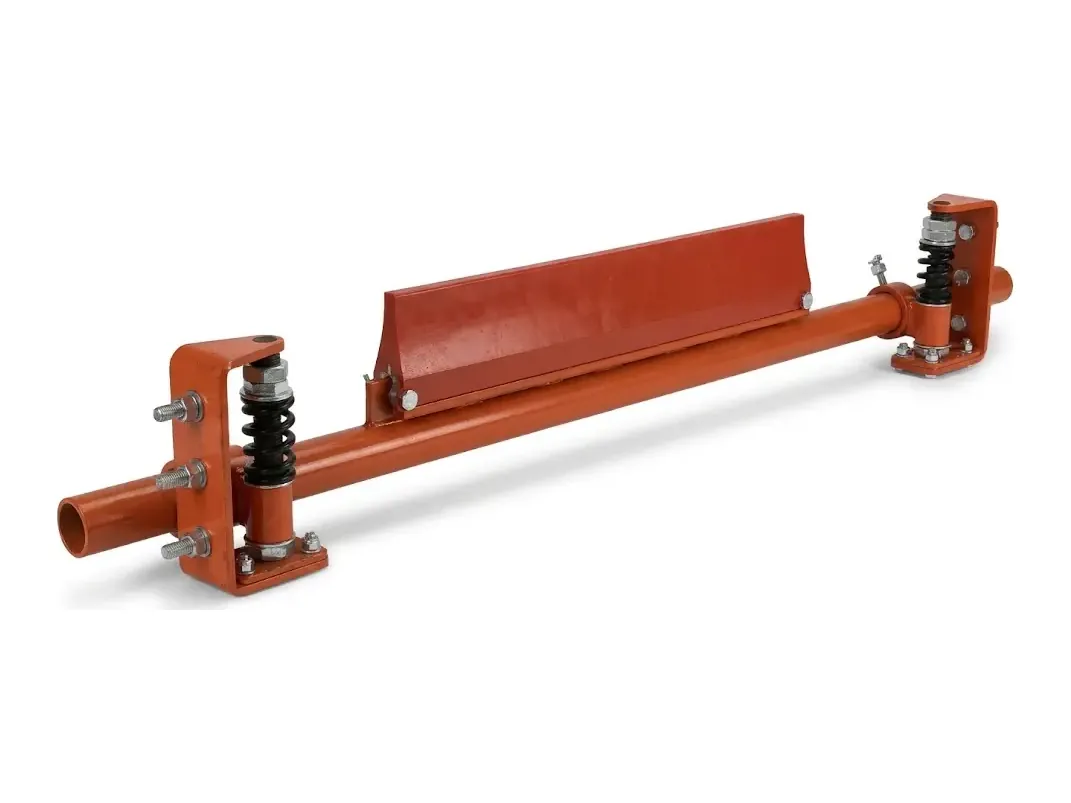
There are two main conveyor belt scraper types, and most belts need both working together, because each one does a different job at a different point on the belt.
Primary scrapers
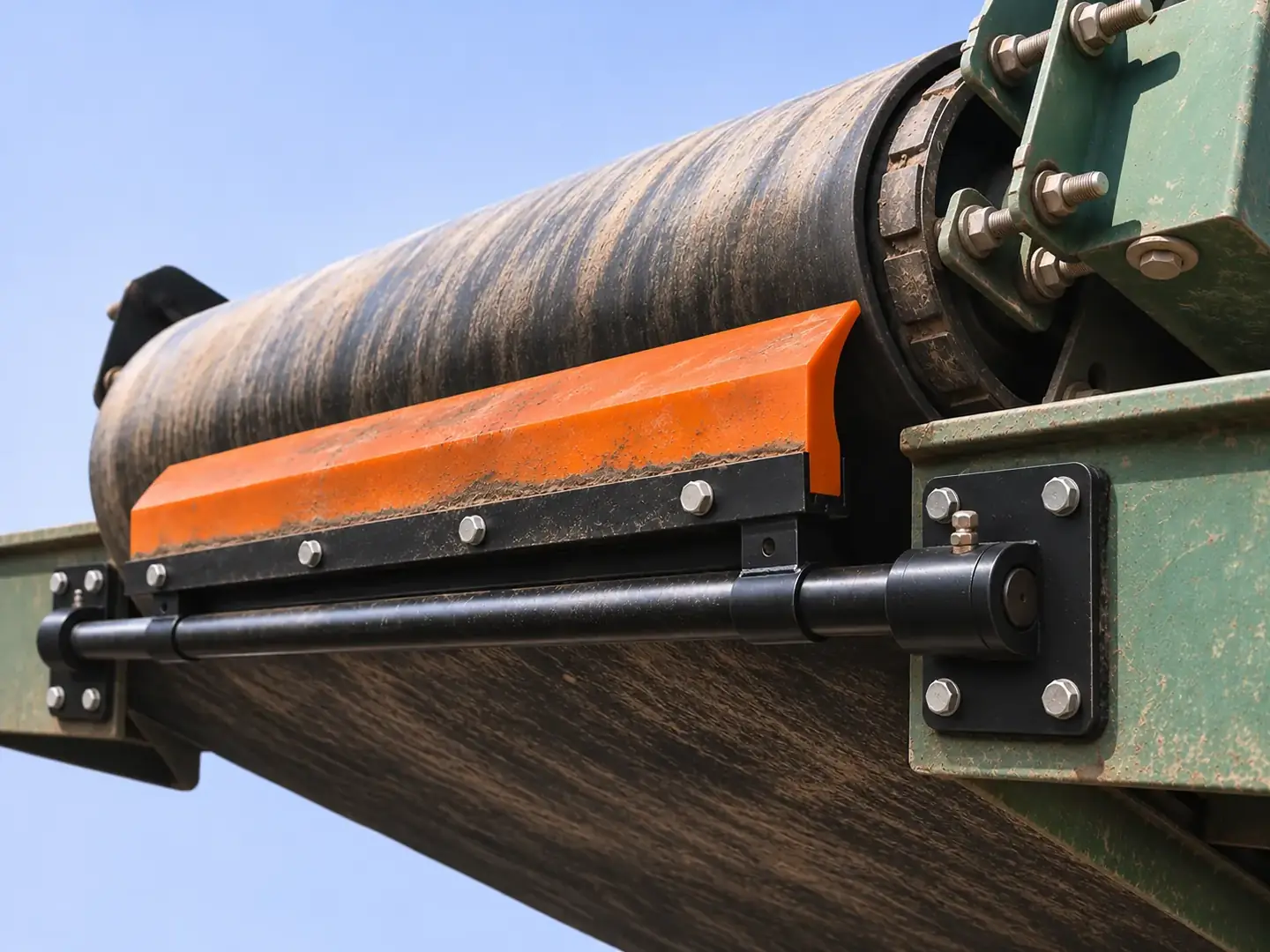
A primary scraper sits on the face of the head pulley, just below the material trajectory. It takes off the bulk of the carryback. Blades are polyurethane or tungsten carbide, held against the belt by a spring loaded tensioner.
Secondary scrapers
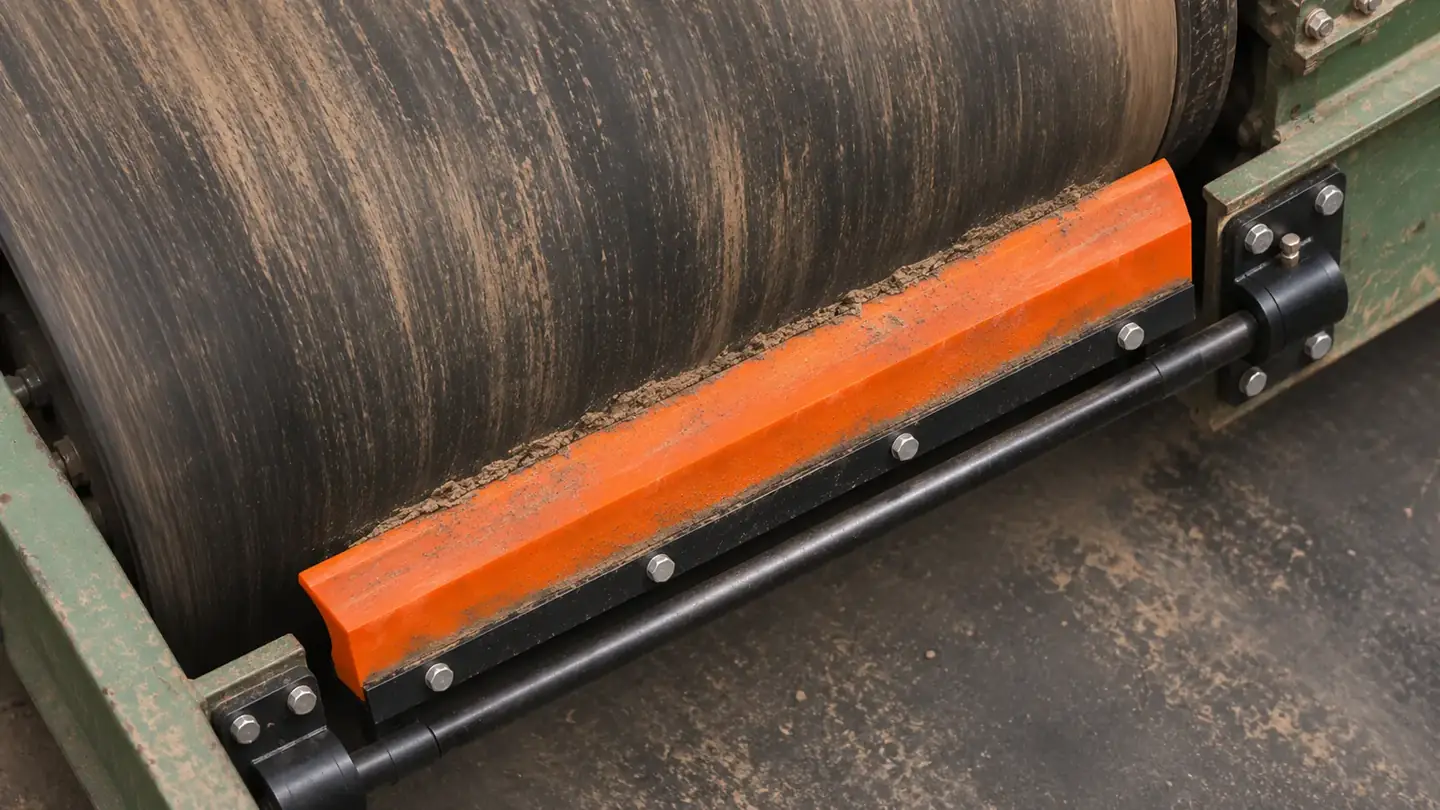
A secondary scraper sits under the belt just behind the head pulley. It removes the fine layer the primary leaves behind. Tungsten carbide is common on abrasive duty; polyurethane suits sticky product and belts with mechanical splices.
Choosing a blade
Polyurethane is the all rounder: it cleans well on sticky or wet product and is kind to the belt. Tungsten carbide costs more but lasts much longer on abrasive ore, so it usually works out cheaper on hard duty belts.
How to choose
Start with belt width and the material you convey, then check for reversing and mechanical splices. Our Scraper Selector uses exactly these questions to suggest a primary and secondary pair.
Need help choosing?
Answer six questions and get a recommended primary and secondary scraper.